The 10 Most Frequently Asked Questions & Answers About Atlassian Cloud Migration with Jira & Confluence
1. Why should we migrate to Atlassian Cloud?
Atlassian Cloud is Atlassian’s strategic platform for the future and is continuously being developed. New functions, modern automation, and AI-powered features are made available there early and on a regular basis. At the same time, administrative overhead is significantly reduced, as Atlassian handles all maintenance, updates, and infrastructure management.
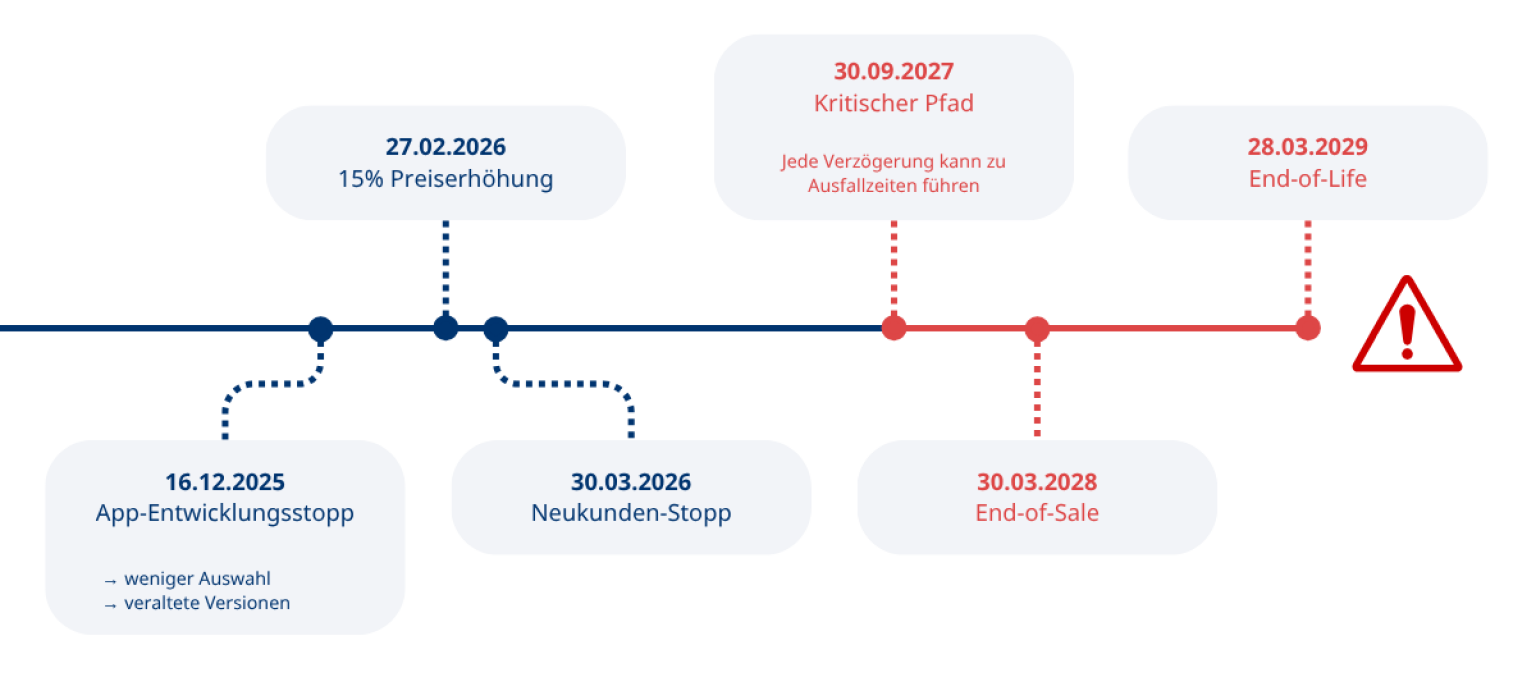
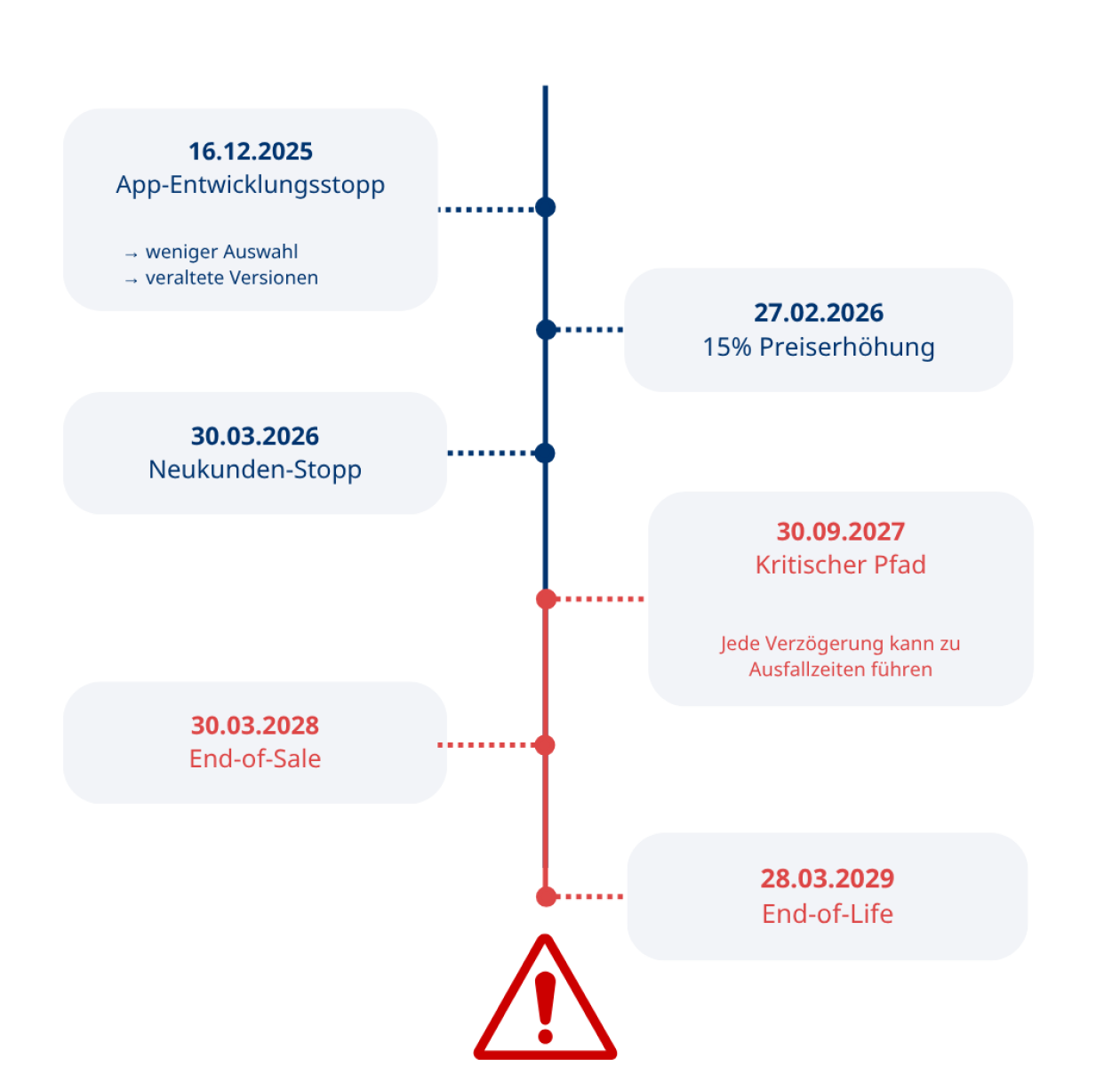
Another key aspect is the announced discontinuation of the data center service:
End-of-Sale: 23.03.2028
End-of-Life: 28.03.2029
One thing is certain: from 30/09/2027 onwards, the critical path begins – from this point on, any delay in migration planning can directly lead to unplanned downtime. Those who have not yet started their migration by then risk falling under time pressure and jeopardizing ongoing operations.
Migrating to the Atlassian Cloud is therefore not only a technological advancement but also a necessary strategic decision to ensure long-term sustainability.
2. What happens if we don't migrate?
Those who put off migration risk more than just technical stagnation. Starting on March 28, 2029, all Data Center instances will be set to read-only mode. Active work will then no longer be possible. Support and security updates will end permanently. Added to this are the already rising and continuing to rise licensing costs for the Data Center, as well as the increasingly difficult availability of experienced migration partners as the date approaches. Those who plan early have the upper hand.
3. Can we migrate all data, including attachments and historical information?
In most cases, this can be done without any problems. Jira and Confluence content—such as issues, pages, comments, attachments, and historical data—can be fully migrated to Atlassian Cloud. Atlassian provides dedicated tools for this purpose: The Jira Cloud Migration Assistant and the Confluence Cloud Migration Assistant significantly simplify the process and enable a structured, validated data migration.
Only specific app data or highly customized settings should be checked in advance, as adjustments or alternative solutions may be necessary in these cases.
4. Is Atlassian Cloud GDPR-compliant, and where is our data stored?
This is a key issue, especially for German and European companies. The good news is that Atlassian Cloud products comply with the requirements of the GDPR. Data is transmitted and stored in encrypted form, and Atlassian holds certifications such as ISO 27001 and SOC 2. In addition, customers on all plans can specify that their data be stored within the EU.
To ensure compliance with legal requirements, we also recommend entering into a data processing agreement (AVV) with Atlassian that includes the EU’s standard contractual clauses. We recommend addressing data protection issues early on.
5. What strategies and models are available for migrating to Jira and Confluence Cloud?
In general, there are various migration approaches available:
Phased Migration (e.g., on a project-by-project basis)
Big Bang Migration (complete migration in one go)
Clean Start (Restart in the Cloud)
Which strategy makes sense in a specific case always depends on the individual circumstances, the complexity of the system, and the company’s goals, and should be carefully evaluated accordingly.
6. How do companies plan their cloud migration?
Successful cloud migrations typically begin with a structured analysis of the existing system landscape, known as the Cloud Readiness Assessment. In particular, this process involves reviewing and optimizing projects, fields, users, roles, and permissions.
The goal is to streamline existing structures and eliminate unnecessary legacy issues in order to create a clean, consistent, and sustainable foundation for the migration. Early preparation helps minimize risks, reduce complexity, and make it easier to plan for the migration effort.
7. How much does Atlassian Cloud cost, and is it worth it in the long run?
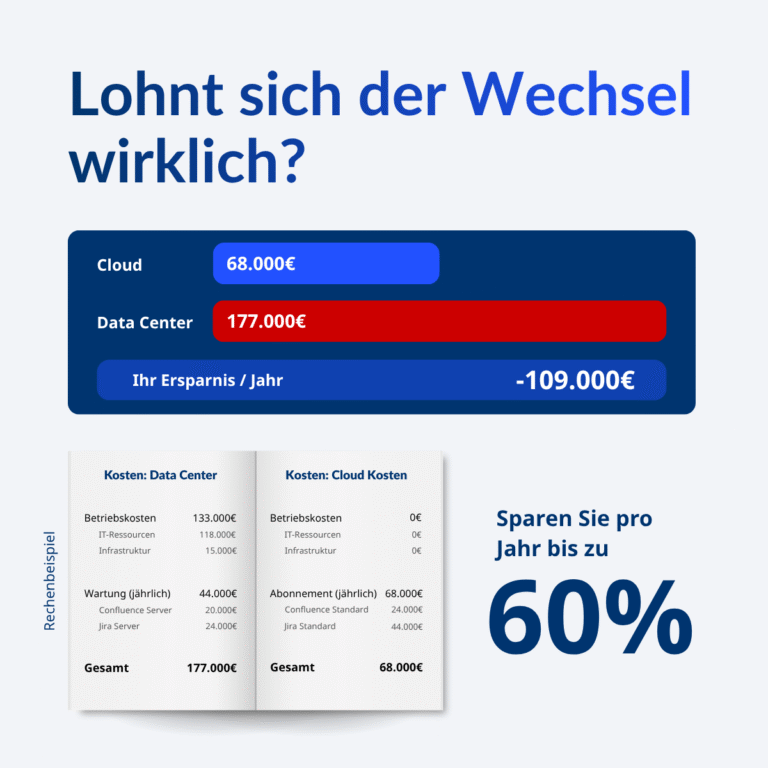
The costs depend on various factors, including the chosen licensing, the number of users, and specific requirements. Compared to a data center, the cloud does have higher ongoing licensing costs, but it completely eliminates operating costs for in-house infrastructure, hardware, and maintenance.
According to a Forrester study, the return on investment for an Atlassian cloud migration at enterprise organizations is up to 230% over three years, with a payback period of less than 6 months. Given the data center price increases that have already occurred and further increases expected in the future, the cloud is thus the more economical choice in the long term in most cases.
Source: Forrester Consulting, The Total Economic Impact™ of Atlassian Cloud Enterprise, June 2025 – tei.forrester.com/go/atlassian/cloudenterprise
8. What will happen to our apps and plugins?
Many existing data center apps are now also available for the Atlassian Cloud or can be replaced by modern cloud solutions. Nevertheless, it is advisable to carefully review all extensions in use beforehand and evaluate them in terms of functionality, compatibility, and future requirements.
Migration often provides an opportunity to optimize the existing tool landscape: processes can be simplified, redundant extensions consolidated, and overall complexity reduced. This often results in a leaner, more maintainable, and more future-proof system landscape.
9. How much downtime do we need to plan for?
The required downtime depends largely on the chosen migration strategy and the complexity of the existing environment.
Big Bang Migration:
The switchover will take place during a clearly defined maintenance window
Usually between a few hours and a maximum of one weekend
Phased Migration:
Individual areas or projects are transferred one after another
This can significantly reduce downtime or even eliminate it entirely
With early planning and appropriate migration methods, the impact on ongoing operations can be minimized in most cases.
10. Do we need outside help?
For simple systems that closely follow industry standards, a Jira or Confluence Cloud migration can often be carried out successfully without external support. However, for more complex environments with numerous dependencies, apps, integrations, and customizations, it is recommended to work with an experienced partner. This allows risks to be identified early on, typical challenges to be avoided, and the migration process to be made significantly more efficient.
The success of the migration depends largely on experience and careful planning. External support can help make the effort involved more predictable and ensure a smooth implementation.
Comparison Table: Data Center vs. Atlassian Cloud
| Data Center | Atlassian Cloud | |
|---|---|---|
| Ongoing licensing costs | Lower | Higher |
| Infrastructure & Operating Costs | Independently | Not applicable |
| Updates & Maintenance | Manual | Automatically |
| New Features & AI | Delayed / restricted | Available immediately |
| GDPR & Data Protection | Full Control | GDPR-compliant (EU hosting) |
| Scalability | Limited / time-consuming | Flexible & Immediate |
| Administrative burden | High | Significantly reduced |
| Future-proofing | EOL 2029 | Secured for the long term |
| Long-Term Total Costs | Rising (+15% starting in 2026) | ROI of up to 230% (3 years) |
Conclusion: Now is the right time for your Atlassian Cloud migration
The end-of-life of Atlassian Data Center on March 28, 2029 may still seem a ways off, but experience shows that those who plan early reap the benefits. After all, a successful Jira or Confluence Cloud migration takes time, preparation, and the right decisions at the right moments. Rising Data Center costs, increasing security requirements, and an ever-more-powerful cloud platform make the switch not only necessary but also sensible.
The good news is: You don't have to go through this alone. Whether it's an initial assessment, a strategic decision, or technical implementation, we'll guide you step by step on your journey to the Atlassian Cloud.
Do you have any questions? We'd be happy to help!
Or simply check for yourself how cloud-ready you really are: Cloud Readiness Checklist
Share this post:
Alyssa O’Connor is our student intern in Business Development. Since September 2025, she has been working on social media and content related to Atlassian.