
The 10 Best Practices for Successful Change Management in IT
Who doesn't know him? Grandpa Hermann, who has a new question every day about how his smartphone works. Time and again, you have to explain something new to him. Or better yet, exactly the same thing as yesterday. This example illustrates pretty much exactly what IT change management is all about.
To us, the interface feels intuitive and second nature. But not everyone has the same level of knowledge or grew up in a generation where technology is ubiquitous. Without some help, Grandpa Hermann would probably get frustrated and give up at some point.
In his case, the solution might still be simple: he could do without certain features or go back to a traditional flip phone. But in many other situations, that’s not an option. We can hardly avoid technological changes in the professional world. They’re virtually everywhere.
Whether it’s the introduction of new software, migrations to the cloud, or the adaptation of IT processes, change is a part of everyday work. However, if employees leave out of frustration because they are left to handle the transition on their own, it jeopardizes the success of the entire project.
This is exactly where IT change management comes in. It ensures that technological changes are implemented in a controlled, efficient, and sustainable manner. By using the right methods, organizations can reduce risks, increase acceptance, and ensure that new systems and processes are not only introduced but actually put into practice.
But let's first clarify a fundamental question:
What is IT change management, and why is it important?
IT change management, also known as change management or transformation management, refers to the systematic support of changes in IT systems and processes to ensure that new software, platforms, or tools are successfully implemented and used over the long term.
Change management helps minimize disruptions when changes are made to critical systems and services.
It’s not just about technology; above all, it’s about the people who use the systems and depend on them. Successful change management ensures that employees understand why the change is necessary (e.g., cloud migration, new Jira instance), accept and use new tools correctly, and support and embrace the goals of the IT organization.
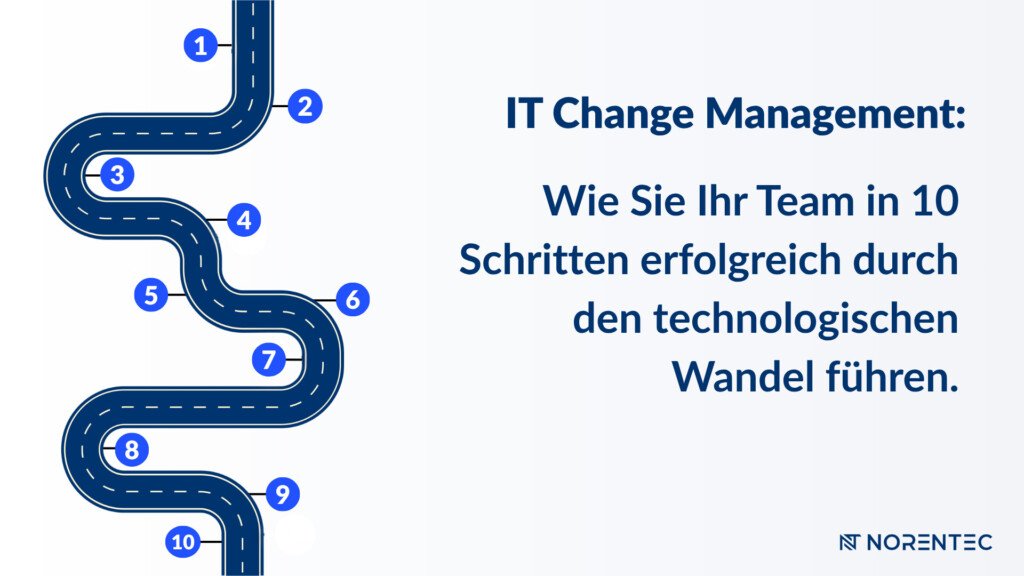
10 Tips for Successful Change Management in IT
In the following sections, I will present 10 best practices that demonstrate how IT change management can be implemented in a controlled, efficient, and sustainable manner. They help minimize risks, increase acceptance, and ensure that new systems and processes are actually used.
Whether you're planning a cloud migration, implementing a new collaboration tool, or optimizing existing IT processes—these 10 points provide concrete action steps for any IT transformation.
1. Define clear goals and a vision for IT changes
Why is this change necessary? What are the goals, and how will they be achieved? How will success be measured?
A structured approach is essential for explaining the rationale and objectives of the project to yourself and others.
Clearly define the specific goals to be achieved (e.g., migration, automation, cloud integration), why this change is necessary, and how success will be measured. Transparent goals provide direction and motivation.
2. Engage leaders as active drivers of change
IT managers, project sponsors, and key users must visibly lead by example and explain to employees why the new software or processes are important. Without management’s understanding, it is unreasonable to expect other employees to understand as well. Timely and active involvement thus lays the foundation for success.
3. Use structured change management methods
To provide targeted support to users during these changes, a clearly structured approach is needed. Such a framework offers simple and repeatable steps that can be used to systematically guide and successfully implement changes. After all, every organizational change represents a personal adjustment for individual employees.
In many models, change management is therefore divided into several phases. But what are the actual phases of change management? Typically, these range from preparing for a change through its implementation to the long-term embedding of new ways of working within the company. In practice, many IT departments also follow the ITIL approach to change management, an established framework developed specifically for managing changes in IT services.
Established change management methods can be used effectively to implement changes in a structured manner. Proven methods include, for example, Kotter’s 8-step model, the ADKAR model, Lewin’s 3-phase model, and Krüger’s 5-phase model. These help companies successfully plan and implement changes.
4. Involve employees in IT projects early on
As the saying goes, “Teamwork makes the dream work.” Keeping employees motivated and engaged is an ongoing challenge. This becomes particularly important in change management. When employees feel like they are an active part of the process, their motivation, understanding, and acceptance of the changes all increase. Through consistent communication, targeted training, and involving them in decision-making, resistance is reduced and engagement is increased.
5. Ensure transparent communication during software rollouts
Regular and transparent communication about new IT systems, planned changes, training opportunities, and timelines reduces uncertainty and builds trust within the team. Individuals should be clearly informed of the reasons, benefits, and implications of upcoming changes.
6. Segment and target stakeholders
Who needs what information, and when? Not all employees need the same information at the same time. Targeted segmentation of stakeholders is a key component of the change process. It ensures that training sessions, training materials, and communication are tailored to the needs of each group.
For example, a segmentation might look like this:
Key User:
Detailed information about new features
Early Access to Training Materials
Involvement in testing phases and feedback sessions
Standard User:
Focus on practical changes in day-to-day operations
Kurze, leicht verständliche Anleitungen und FAQs
Clear schedules for workshops or training sessions
With this approach, each group receives exactly the information and support it needs, which reduces uncertainty, boosts motivation, and increases acceptance of new systems in the long term.
7. Plan resources and the budget flexibly during the change process
Think of the change process as a dynamic sequence of events, not a static plan. Requirements, priorities, and framework conditions can change over the course of a project. That is why it is crucial to allocate sufficient time, budget, and IT support, and to adjust these resources flexibly as needed. Only when organizations remain agile and can respond to new insights can risks be minimized and projects managed successfully. Without this adaptability, even technically well-prepared initiatives can fail.
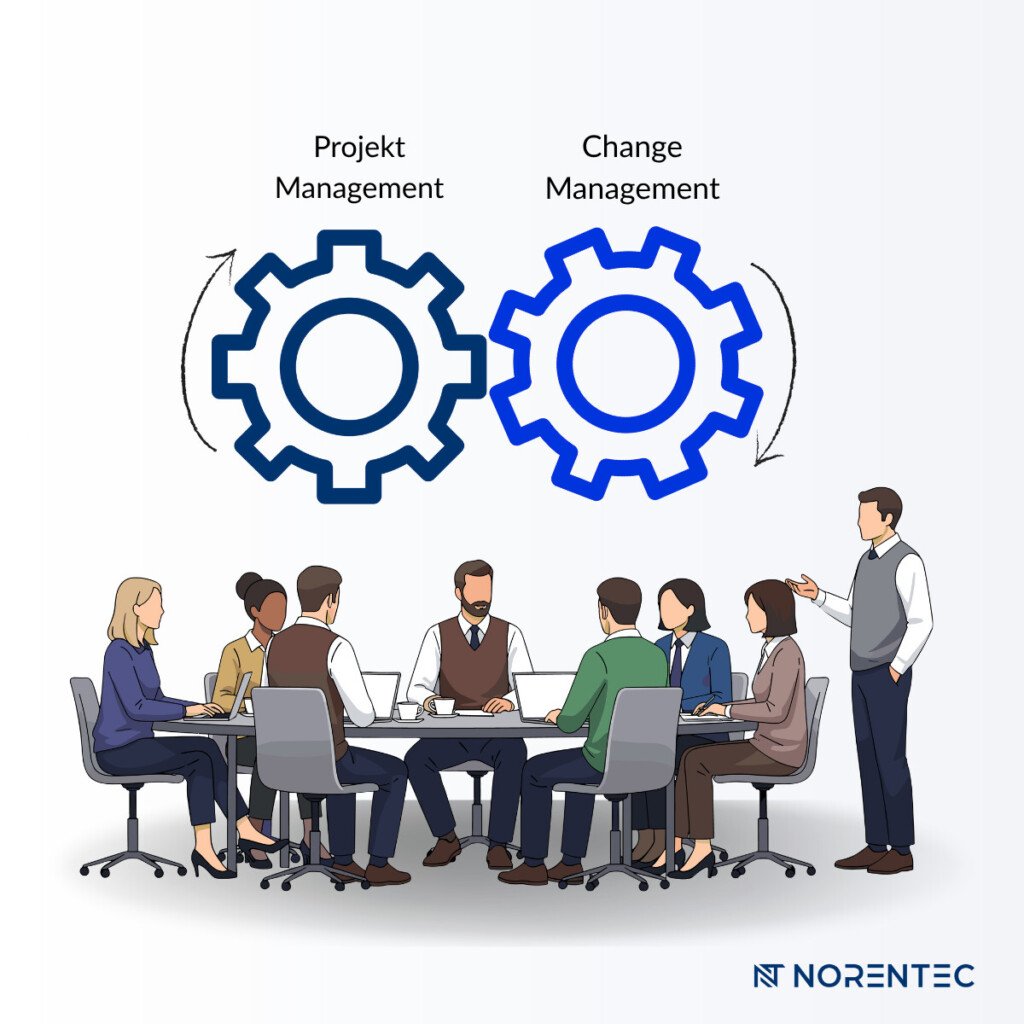
8. Integrating IT Project Management and Change Management
A particular problem often arises in change management within software development: The technical project proceeds on its own, while change management is considered separately.
Close coordination between the IT project team and the change management team not only prevents duplication of effort but also ensures consistent communication and a coordinated approach. When milestones, go-live dates, testing phases, and training initiatives are planned in sync, a coherent overall picture emerges for the organization.
9. Ensure the long-term implementation of new systems
The Go-Live is not the end of an IT change. A “change” is only truly successful once new systems, processes, or tools are used as a matter of course in day-to-day work. After the introduction of new systems, measures such as the following should therefore be taken:
Training Courses
FAQ Portals
Support Teams
and follow-ups
ensure that the changes are permanently embedded.
Especially in the IT environment—for example, with cloud migrations or new collaboration tools—the quality of the user experience determines the success of a project. If features are available but not understood or used, the expected added value will not materialize.
Sustainable implementation therefore means actively promoting new ways of working, making them visible, and continuously developing them further.
10. Establish Performance Measurement in IT Change Management
What isn't measured cannot be controlled or improved. Successful IT change management therefore defines clear metrics—both technical and organizational—from the very beginning.
However, it is not enough to focus solely on the technical rollout. What matters most is whether the change is actually adopted. Typical metrics in change management include technical KPIs, adoption and usage metrics, and qualitative indicators (e.g., feedback from surveys).
A combination of quantitative and qualitative metrics provides a realistic picture of the success of the change. Performance measurement is thus a management tool that ensures IT changes have a long-term impact.
Conclusion: Why is IT change management so important?
IT change management is crucial because technological changes are successful only when both people and processes are taken into account. New systems, tools, or cloud solutions add value only when they are understood, accepted, and used correctly.
In short: Well-planned IT change management is needed to implement IT transformations efficiently, in a controlled manner, and sustainably, and to ensure that the time, energy, and technology invested actually deliver the desired benefits.
Share this post:
Alyssa O’Connor is our student intern in Business Development. Since September 2025, she has been working on social media and content related to Atlassian.

Blog Helpdesk Software im Vergleich: Die besten Ticketsysteme 2026 Inhaltsverzeichnis Ob Kundensupport, IT-Abteilung oder interner Service, ohne ein strukturiertes Ticketsystem...
Blog: The 10 Most Frequently Asked Questions & Answers About Atlassian Cloud Migration with Jira & Confluence Table of Contents 1. Why should we...
Blog: Phases of the Atlassian Cloud Migration Table of Contents Cloud migration? End-of-life for Data Center? These terms are increasingly mentioned in the same breath these days. The cloud offers enormous advantages:...